Stump Grinding in Lincoln, NE
Stump grinding in Lincoln, NE: why grind a stump below grade, how the work goes on loess soil, and how to decide between grinding and leaving it.
Why deal with the stump at all
A stump left after removal is more than an eyesaw. It's a trip hazard, a mower-killer, and in Lincoln it becomes a nursery for carpenter ants, fungi, and surface roots that keep sending up suckers. Elm and cottonwood stumps are especially persistent, pushing shoots for years if they're not ground out. Grinding reduces the stump and the top of the root flare to chips below the soil line, so the ground can be leveled and reused.
Most people arrive at stump grinding right after a tree removal, but plenty also call about old stumps that have sat for years and finally gotten in the way of a new patio, fence line, or garden bed. Either way the goal is the same: get the wood far enough below grade that you can put soil and sod over it or plant something new.
If a stump is sprouting and you're not sure whether the whole root system is still alive, it's worth a quick look during a tree trimming or assessment visit so the grinding depth matches what you plan to do with the spot.
How stump grinding works
The machine does the heavy work, but setup and cleanup are what protect your yard.
-
Locate and clear
We check for buried utilities, irrigation lines, and sprinkler heads near the stump, and clear rocks that could throw or damage the cutting wheel.
-
Grind below grade
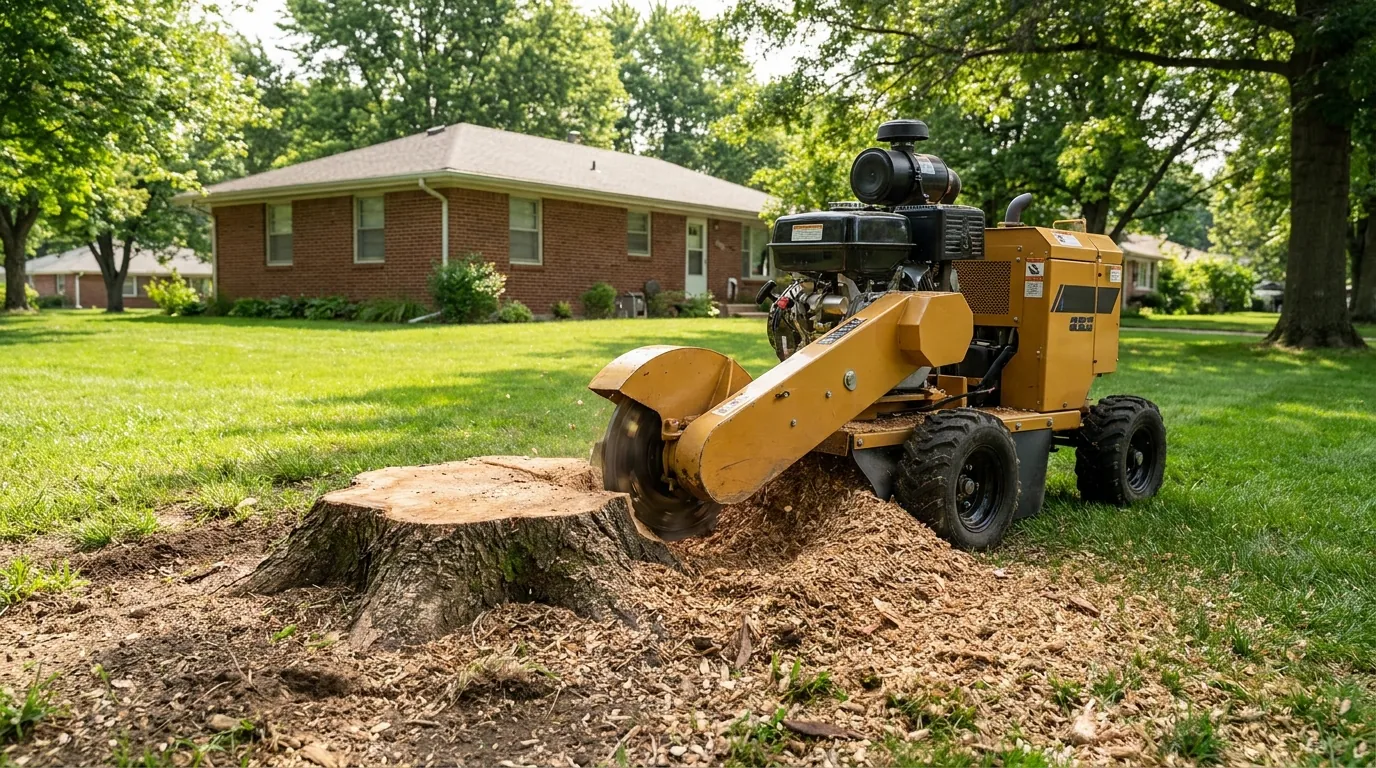
A rotating cutting wheel reduces the stump and upper roots to chips, typically several inches below the surface — deeper if you plan to plant a new tree in the same spot.
-
Manage the grindings
Grinding produces a mound of wood chips and soil. We can rake it back into the hole to settle, or remove the excess so you can bring in topsoil.
-
Level and finish
The void is backfilled and tamped so it doesn't sink into a low spot later. On loess soil, settling continues for a season, so a slight crown helps it level out.
Reclaim the spot
Send us the location and rough size of the stump and tell us what you want to do with the area, and we'll recommend a grinding depth.
Stump grinding for Lincoln and nearby towns.
Frequently asked questions
How deep do you grind a stump?
A standard grind goes several inches below grade, enough to lay sod or seed over it. If you plan to replant a tree or shrub in the same spot, we grind deeper and clear more of the root mass to make room for new roots.
Can I plant grass where the stump was?
Yes, once the void is backfilled and leveled. Mixing the wood grindings with topsoil works for grass, though the decomposing chips can tie up nitrogen for a while, so adding fresh soil helps new sod establish.
Why does the ground sink after grinding?
Backfilled grindings and loosened soil settle over time, and Lincoln's freeze-thaw cycle speeds that along. Leaving the backfill slightly mounded lets it settle to level instead of forming a dip you have to fix later.
Do roots keep growing after the stump is ground?
The remaining roots stop growing once the stump and root flare are ground out, since the tree can no longer produce energy. They slowly decompose in the soil, which is normal and doesn't need further treatment.