A tree on a structure or vehicle
Any tree or large limb resting on a roof, deck, garage, or car is adding load every hour, especially if it's still wet. The longer it sits, the more interior and structural damage spreads.
Storm-damaged or fallen trees in Lincoln, NE? Learn the warning signs, what emergency tree service involves, and how our crew responds safely.
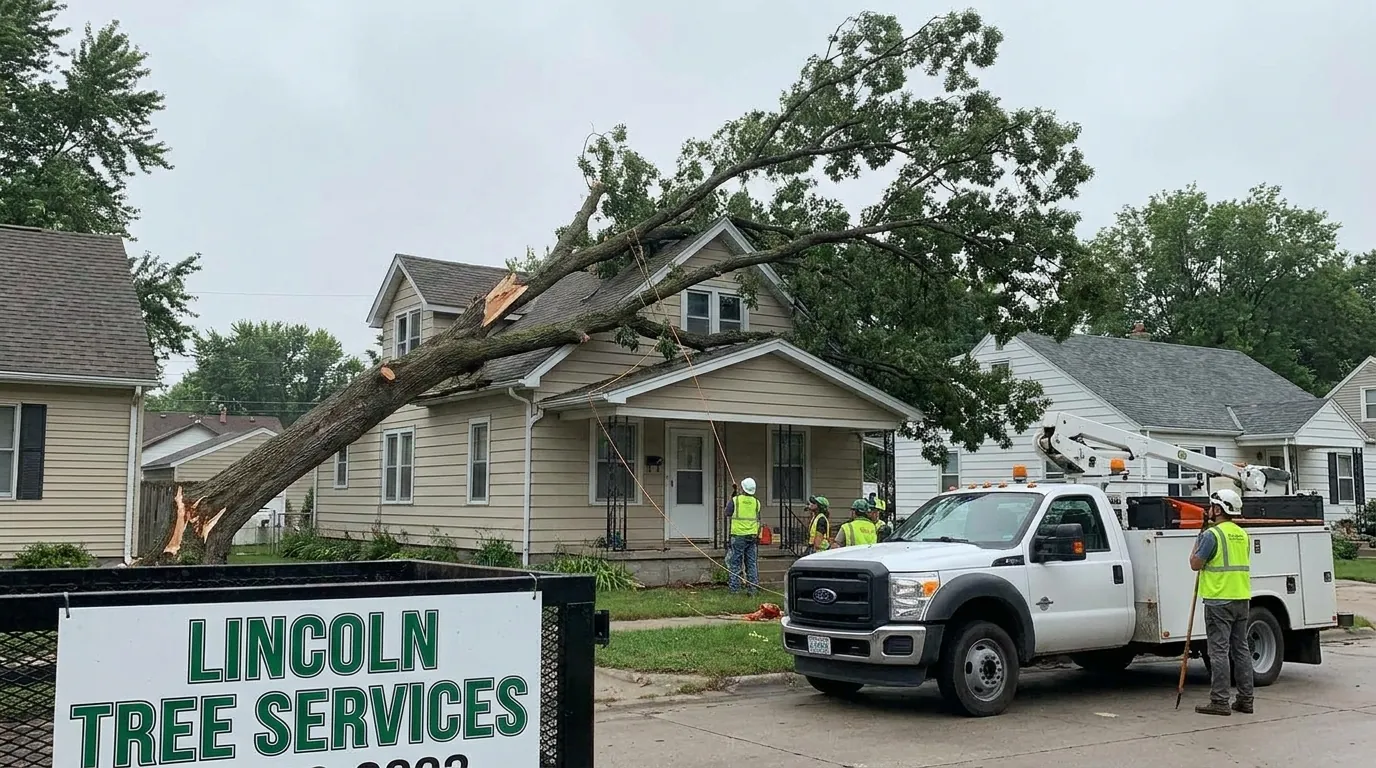
Lincoln's spring and summer storms arrive fast and hit hard. Straight-line winds, saturated loess soil, and heavy wet snow on still-leafed branches are the usual culprits behind a tree that suddenly splits, uproots, or drops a major limb. When that failure lands on a house, a car, a fence, or a power line, it stops being routine yard work and becomes an emergency tree service call where the priority is making the scene safe before anything else.
An emergency job is different from a scheduled removal in one key way: the tree is already in a failed or partly failed state, and the loads on it are unpredictable. A trunk that looks stable can be holding tension that releases the moment a cut is made. The work is about reading those forces, relieving them in the right order, and getting weight off whatever the tree has landed on without making the situation worse. If your tree is leaning but hasn't dropped yet, our page on tree removal covers the planned version of the same work.
Some damage can wait for a scheduled visit. These signs usually can't.
Any tree or large limb resting on a roof, deck, garage, or car is adding load every hour, especially if it's still wet. The longer it sits, the more interior and structural damage spreads.
A limb touching or down on a service line is a life-safety hazard. Stay well back, keep others away, and report it to the utility first — crews do not cut near energized lines.
If a tree has tipped since the storm and you can see the soil heaving or the root plate lifting on one side, the anchorage has failed. It can come the rest of the way down with little warning.
A trunk cracked down the middle, or a broken limb hung up in the canopy, is stored energy waiting to let go. These 'widow-makers' are a common reason to call after Lincoln windstorms.
Emergency work follows a deliberate order, even when the clock is running.
The first step is identifying hazards — power lines, unstable limbs, trunk tension — and keeping people out of the fall and recoil zones. Nothing is cut until the loads are understood.
Weight is taken off the damaged tree piece by piece, often from the outside in, using rigging to lower sections rather than drop them where they'd do more harm.
Once the tree is lightened, the portion resting on a roof, fence, or vehicle is removed carefully so the structure isn't dragged or torn as the weight shifts.
Debris is cleared from access routes and the remaining tree is left in a stable state. If the whole tree needs to come out, that can be scheduled as a follow-up removal.
The freeze-thaw cycle Lincoln runs through every winter loosens soil around root plates, and the loess soils common across the area drain unevenly — so a tree that stood through years of wind can give way after one heavy spring rain softens its footing. Silver maples, cottonwoods, and older Siberian elms are especially prone to co-dominant stems and included bark that split under load. Knowing which species and defects are likely in your yard is why a tree health assessment before storm season is worth the visit.
After the emergency is handled, you're often left with a stump and a torn-up area. We can follow up with stump grinding and cleanup so the yard is usable again. Call when you have a tree down or one that's clearly failing — describe what it's touching and whether a line is involved, and we'll tell you what needs to happen first.
Keep everyone away from the tree and from anything it's touching, and don't park or walk under hung-up limbs. If a power line is involved, call the utility first and treat every downed line as live. Clear a path to the tree only if you can do it safely from a distance.
Not always. A tree that has leaned the same way for years may be stable, but a new lean after a storm — especially with soil lifting at the base — usually means the roots have let go and it should be looked at right away. When in doubt, keep clear and call.
That's the goal, and it's why the weight is taken off in stages with rigging rather than cut and dropped. Some damage from the original impact is already done, but careful removal avoids adding to it by dragging or dropping the limb.
Yes. Once the immediate hazard is resolved, debris is cleared and the remaining tree is left stable. If the tree needs full removal or you want the stump gone, that can be scheduled as a follow-up.
Call to describe the problem and get a quote for work in Lincoln, NE.