Tree Removal Service in Lincoln, NE
Tree removal service in Lincoln, NE. We take down hazardous, dead, and storm-damaged trees on loess soil lots across the area — safely and cleanly.
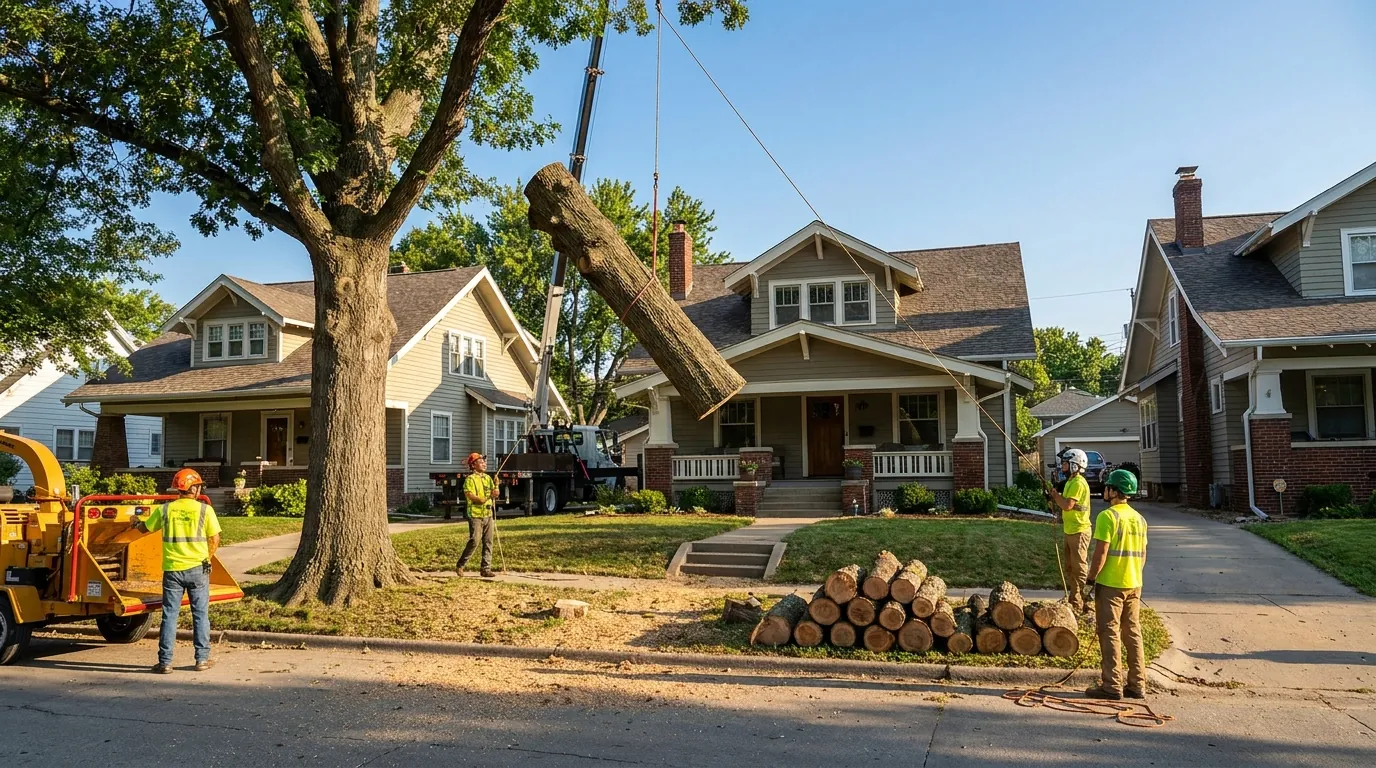
When a tree needs to come down
A tree removal service exists for the moment a tree stops being an asset and starts being a liability. In Lincoln, that moment often arrives after a spring storm splits a trunk, after a hard freeze-thaw winter leaves a maple with cracked bark and dying limbs, or after years of slow decline finally show up as a hollow base or a canopy that leafs out late and thin. Looking for a tree service near me usually means you already suspect one of your trees is a problem — this page explains how we decide, and how the work is actually done.
The warning signs worth acting on are fairly consistent: large dead limbs over a roof, driveway, or play area; a trunk that leans more than it used to; mushrooms or conks growing from the base; deep vertical cracks; roots that heave and lift as the ground shifts; and a canopy that is more bare branch than leaf by mid-summer. Any one of these can mean the tree is compromised, and near a house on a Lincoln lot, a compromised tree is a falling risk that only grows through the next storm season.
Not every troubled tree needs to come out. Sometimes the right answer is pruning or cabling, and sometimes it is repair rather than removal — we cover that on our tree removal repair page. When removal genuinely is the safest option, the goal is to bring the tree down in controlled sections without damaging the fence, the house, the neighbor's property, or the underground utilities that run through so many Lincoln yards.
How a removal actually goes
Every tree is different, but a careful removal follows the same basic sequence.
-
On-site assessment
We look at the tree's lean, health, and the space around it — nearby structures, power lines, fences, and the soft loess soil underfoot that affects how equipment and dropped wood behave. From that we plan the drop or the piece-by-piece dismantle.
-
Setting up the work zone
We clear and protect the landing area, rope off the space, and decide whether the tree can be felled whole or needs to come down in sections. On tight Lincoln city lots, sectional removal from the top down is usually the safest route.
-
Controlled takedown
Limbs and the trunk are cut and lowered in a planned order so nothing swings into a roof, a fence, or a flowerbed. Larger wood is rigged down rather than dropped when there isn't room for a clean fall.
-
Cleanup and wood handling
Branches are chipped, logs are cut to a size you can use or haul, and the site is raked. What's left is the stump — which you can leave, or have ground down as a separate step.
Local conditions that change the job
Lincoln's loess soils drain and shift in ways that matter for removal. During wet spring stretches the ground softens, root plates loosen, and a leaning tree can become unstable faster than its canopy suggests — that's why a lean that appeared over one season is worth a look. The same soil compacts and holds equipment poorly when saturated, so timing a removal for drier ground often means a cleaner job with less lawn damage.
The freeze-thaw cycle is the other big factor. Repeated freezing and thawing works into existing bark cracks and hollow points, so a tree that looked borderline in fall can be clearly failing by spring. After the storms that roll through in spring and early summer, we see the results of that winter damage: snapped leaders, hanging limbs, and split crotches that make a tree unsafe to leave standing.
If you're weighing whether to remove or replace, our tree removal installation page covers how a new planting is set up so it stands a better chance against the same conditions.
Request an assessment
Tell us what the tree is doing and where it sits, and we'll walk you through whether removal, repair, or pruning is the right call.
Serving Lincoln and nearby towns including Waverly, Hickman, and Bennet.
Frequently asked questions
How do I know if my tree needs to be removed or just trimmed?
Trimming handles dead or overgrown limbs on an otherwise healthy tree. Removal is for trees with structural failure — a hollow or split trunk, major dead sections, or a worsening lean. We assess on site and recommend the least-invasive option that keeps your property safe.
Will removing a tree damage my lawn?
There is always some impact, but it's manageable. On Lincoln's loess soil we prefer to work when the ground is drier so equipment and dropped wood don't rut or compact the lawn. Sectional takedowns near the house further limit disturbance.
Do you remove the stump too?
Stump grinding is a separate step from the removal itself. Some homeowners leave the stump, and others have it ground down for replanting or a clean lawn. We can handle the removal and discuss stump options at the same visit.
What happens to all the wood and branches?
Branches are typically chipped and the trunk is cut into manageable logs. You can keep the wood for firewood or have it hauled away — we'll confirm what you'd prefer before we start so cleanup matches your plan.