Tree Removal Installation in Lincoln, NE
Tree planting and replacement in Lincoln, NE. We help you choose and install the right tree for loess soil and freeze-thaw winters after removal.
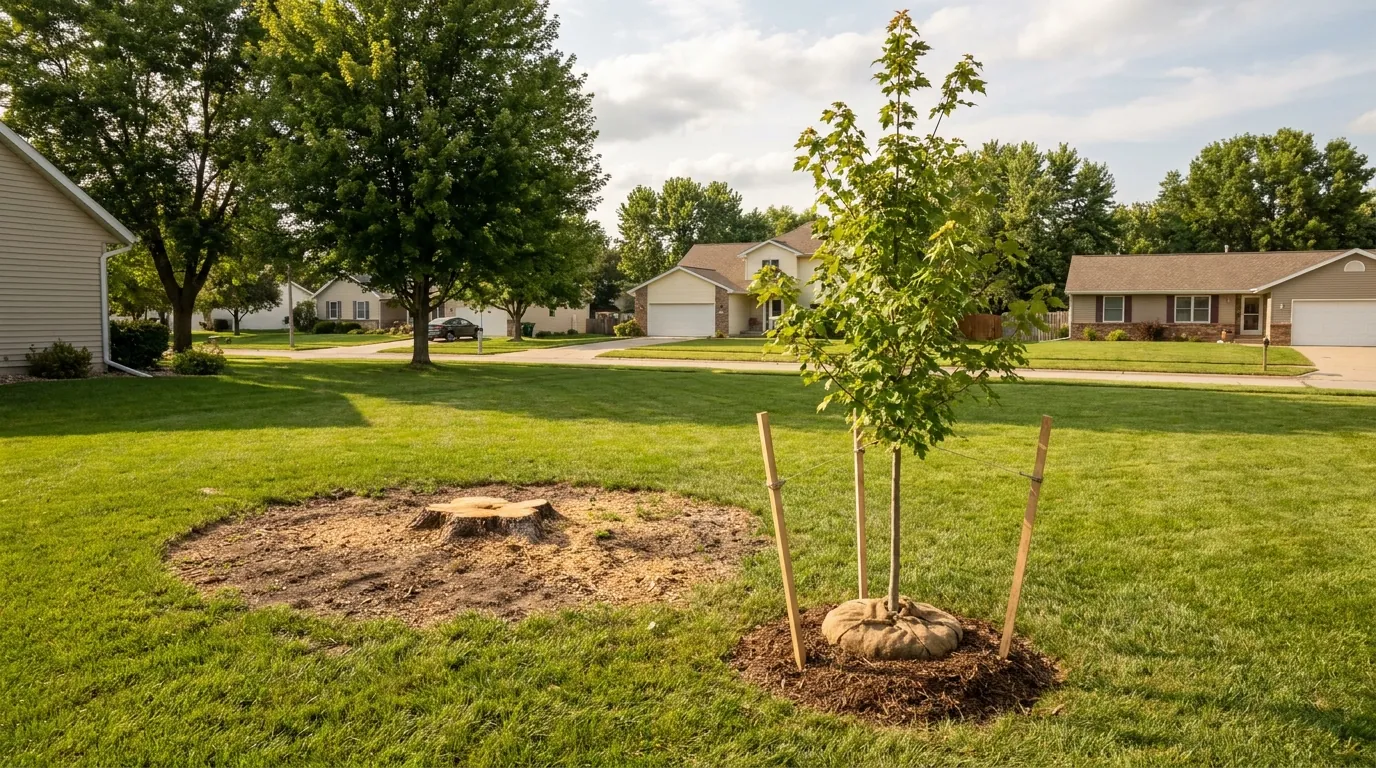
Replanting after a removal
Tree removal installation is the replacement side of the work: once a hazardous or dead tree is gone, the right new tree, planted correctly, restores the shade, screening, and value the old one provided. It's the natural follow-up to a tree removal service, and the choices made now — species, location, and how the tree goes in the ground — decide whether that replacement thrives or struggles in Lincoln's conditions.
Homeowners tend to focus on the species, and that matters, but where and how a tree is planted matters just as much. A tree set too deep, dropped into a hole that's too small, or planted right back over a fresh stump grinding will fight its whole life. On Lincoln's loess soil, which holds water and can compact, planting technique is often the difference between a tree that establishes in a season and one that sulks for years.
Species choice should account for the same forces that took the last tree down. If freeze-thaw cracking or storm breakage was the problem, a stronger-wooded, better-structured species in the right spot is a real improvement — not just a like-for-like replacement of a tree that was prone to failure.
How a replacement planting is done
A good installation is mostly about site prep and depth, not just dropping a tree in a hole.
-
Site and species selection
We look at sun, spacing from the house and utilities, and drainage, then match a species that suits Lincoln's soil and climate and the space it has to grow into. Avoiding a species prone to the same failure as the old tree is part of this.
-
Preparing the planting hole
The hole is dug wide and no deeper than the root ball, with the sides loosened so roots can push into the dense loess rather than circling. If a stump was ground here, we account for the disturbed, chip-filled soil.
-
Setting the tree at the right depth
The root flare stays at or slightly above grade — planting too deep is the most common reason young trees fail. Backfill is firmed to remove air pockets without compacting the soil into concrete.
-
Mulch, water, and staking
A mulch ring holds moisture and moderates the soil temperature through freeze-thaw swings, kept off the trunk. We stake only if the site or tree needs it, and set up a watering plan for the first establishing season.
Planting for Lincoln's soil and seasons
Loess soil is the reason planting depth and hole width get so much attention. It's fine and packs tightly, so a narrow hole leaves new roots struggling to spread, and a tree planted low sits in a bowl that collects water. Loosening a wide area and keeping the root flare high gives roots room to establish before the next dry summer stress-tests them.
Timing matters against the freeze-thaw cycle. Newly planted roots are vulnerable to being heaved by repeated freezing and thawing over their first winter, which is why mulch and correct depth aren't optional extras — they buffer the soil and hold the tree steady. Fall and spring plantings each have trade-offs, and we'll talk through which suits your site.
If the tree you're replacing failed because it was damaged rather than dead, it's worth reading our tree removal repair page first — occasionally the better move is to save the existing tree rather than start over with a new one.
Plan your replacement tree
Tell us about the spot and what you're hoping the new tree will do — shade, screening, or curb appeal — and we'll help you choose and install one that fits.
Serving Lincoln and nearby towns including Waverly, Hickman, and Bennet.
Frequently asked questions
Can I plant a new tree right where the old one was removed?
Often, but not directly on top of a fresh stump grinding, where the soil is loose and full of wood chips that rob nitrogen as they break down. We either shift the planting spot or amend and settle the area first so the new tree gets sound soil to root into.
What's the best time of year to plant in Lincoln?
Spring and fall are both workable. Fall lets roots establish before summer heat but carries some risk of winter heaving on our freeze-thaw soils, which mulch and correct depth help prevent. We'll recommend timing based on the species and your site.
How do I choose the right species?
Match the tree to the space, the sun, and the soil, and consider what caused the last tree's problems. If storm or freeze damage was the issue, a stronger-structured species in a well-chosen spot is a meaningful upgrade over a like-for-like replacement.
How much watering does a new tree need?
Newly planted trees need consistent, deep watering through their first establishing season — more than most people expect, especially in a dry Lincoln summer. We set up a simple watering schedule so the roots establish before the tree has to fend for itself.