Clean pruning of damaged limbs
Torn and hanging branches are cut back to healthy tissue with proper cuts, so the wound seals over instead of inviting decay. Ragged storm breaks left alone become entry points for rot.
Storm and structural tree repair in Lincoln, NE. We treat damaged trees with pruning, cabling, and cleanup so removal isn't always the answer.
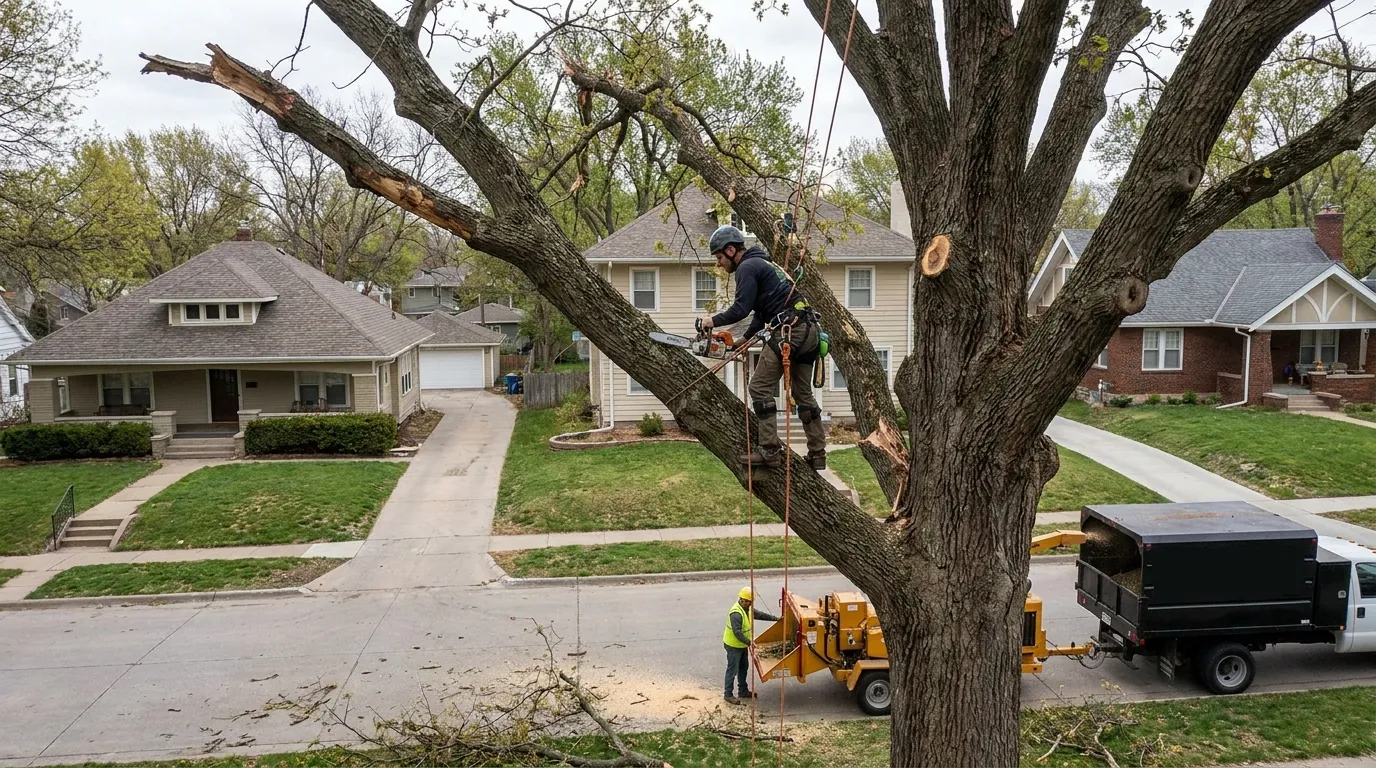
Tree removal repair is the work of saving a tree that's been damaged rather than taking it out. After Lincoln's spring storms, plenty of trees look worse than they are — a torn limb, a stripped section of bark, or a leaning young tree can often be corrected if it's addressed before decay and instability set in. The alternative is watching a repairable tree slide toward a full tree removal service that might have been avoided.
The signs that repair may be worthwhile include a single broken or hanging limb on an otherwise healthy tree, a fresh bark wound from wind or impact, a co-dominant trunk that's beginning to split, or a young tree pushed off vertical by wind or saturated ground. The key word is otherwise healthy — repair buys time and safety for trees with sound roots and a solid main structure, not for trees that are already hollow or dying.
Deciding between repair and removal is the whole point of an on-site look. We'd rather save a mature shade tree than lose it, because in Lincoln's summers that canopy is doing real work — but not at the cost of leaving a hazard standing over your roof.
Repair is a set of tools, chosen to match the specific damage.
Torn and hanging branches are cut back to healthy tissue with proper cuts, so the wound seals over instead of inviting decay. Ragged storm breaks left alone become entry points for rot.
A tree with a weak crotch or split fork can sometimes be supported with cabling that reduces stress on the weak point, letting the tree stand safely rather than being removed.
Removing dead, crossing, and weakly attached branches reduces the sail area a storm can grab and lowers the odds of the next failure — especially valuable heading into Lincoln's storm season.
A young tree leaned over by wind or soft soil can often be straightened and staked while its roots re-establish, saving a planting you'd otherwise lose.
The freeze-thaw cycle is the reason speed matters. An open wound or split heading into winter takes on water that freezes, expands, and enlarges the crack — so a break that could have been cleaned up in the fall becomes a bigger structural problem by spring. Repairing damage promptly, before the first hard freezes, gives the tree its best chance.
Loess soil shapes the repair of young and leaning trees. It's fine-grained and holds water, so after heavy spring rain the root zone stays soft and a tree can lean further before it settles. Staking and correcting a lean works best once the ground firms, and we time that work accordingly rather than fighting saturated soil.
When we assess a damaged tree and conclude it can't be safely saved, we'll say so plainly and walk you through the tree removal service instead. Repair is only worth doing when it genuinely leaves you with a sound tree.
Send us a description or photo of the damage and where the tree sits, and we'll tell you whether repair or removal makes more sense.
Serving Lincoln and nearby towns including Emerald, Walton, and Yankee Hill.
Sometimes. A minor split in an otherwise healthy tree can often be supported with cabling or bracing that relieves stress on the weak point. A trunk split deep into the main stem, though, usually means the tree is beyond safe repair — we assess each case on site.
Sooner is better. Hanging limbs are an immediate falling hazard, and open wounds heading into Lincoln's freeze-thaw winter tend to worsen. Addressing damage promptly usually means less decay and a better chance of saving the tree.
It often is, since it involves less labor and equipment than a full takedown, but it depends on the tree and the damage. The bigger question is whether repair leaves you with a genuinely safe tree — if it doesn't, spending on repair isn't worthwhile.
Support hardware is installed high in the canopy and is generally unobtrusive from the ground once leaves are out. It's a structural measure meant to keep a valued tree standing, not a cosmetic change to how the tree looks.